It’s Carnival Time!

January and February can feel long, cold and boring, especially for those of us who live in the colder climates.  That’s why Carnival season is such a welcome celebration to break up the winter doldrums in northern climates and such an exciting time of year in warmer climates. I’ve channelled this theme in several of my sculptures and it’s now one of the courses I offer in my in-studio and online workshops. You can find out more on my website at www.saracinocollection.com under “Open Classes”, or for the online version through http://www.aforartistic.com

img_5215

Available at Le Balcon D’Art http://www.balcondart.com

Whenever we hear the word “Carnival” a few celebrations that come to mind include Rio de Janeiro, music and people dancing in colorful costumes and headpieces, or maybe Renaissance-themed dresses, powdered wigs and masks at the Venetian carnival. New Orleans famous Mardi-Gras is celebrated across North America. In Canada we have “Carnaval de Quebec” from January 27-February 12 and right here in the country’s capital we have “Winterlude” from February 3-20th.

But have you ever stopped to wonder, where does this celebration come from? Or, why do we celebrate it in the early months of the year? Here are a few fun facts  to help you understand this celebration better!

Carnival season occurs before Lent and is traditionally held in areas with a large Catholic population. Lent is the six weeks directly before Easter and is marked by fasting, pious or penitential practices. Traditionally during Lent, no parties or other celebrations were held, and people refrained from eating rich foods, such as meat, dairy, fats and sugar. In the days before Lent, all rich food and drink had to be disposed of, so people threw a big party with the whole community to finish all of it. The celebration combined elements of a circus, a public street party and of course, masks. Some of the best-known traditions, including carnival parades and masquerade balls were first recorded in medieval Italy. The Carnival of Venice was, for a long time, the most famous carnival and considered to be the origin of Carnival.
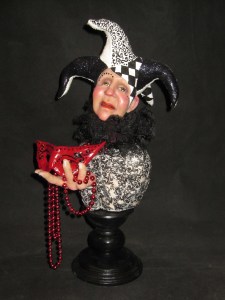
img_5486

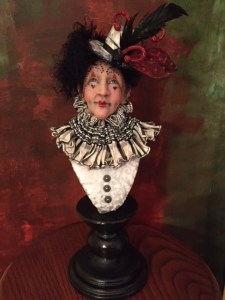
“Arlecchino” Available at Studio 87 http://www.galleryongore.com

From Italy, Carnival traditions spread to the Catholic nations of Spain, Portugal, and France. From France it spread to New France in North America. From Spain and Portugal it spread with Catholic colonization to the Caribbean and Latin America. (excerpts from latintimes.com)

The exact origin of the name “Carnival” is disputed, but some state that the word comes from the Late Latin expression carne vale, which means “farewell to meat,” signifying that those were the last days when one could eat meat before the fasting of Lent. The word carne may also be translated as flesh, so suggesting carne vale as “a farewell to the flesh,” a phrase actually embraced by certain Carnival celebrants who encourage letting go of your former self and embracing the carefree nature of the festival. The last day of Carnival is “Mardi Gras”
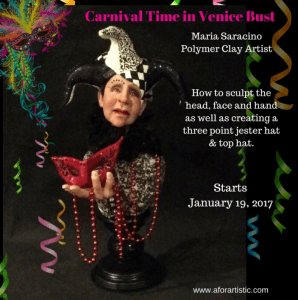
screen-shot-2017-01-17-at-2-14-40-pmThe six weeks of Lent in 2017 starts on March 1st. So between now and then is the time to celebrate “CARNEVALE”! And if you are feeling creative, sign up for my open in-studio workshop or the online class at http://www.aforartistic.com

If you prefer being creative in the kitchen, you can try this crispy light treat – they are traditional Italian Carnival Sweet Fritters called Crostoli or Chiacchiere.

Recipe by Ilaria at http://www.ilariasperfectrecipes.com/

Prep time 30 mins  .  Cook time 15 mins  .  Total time 45 mins  .   Serves 4
 Ingredients
  • 1 large or medium egg
  • 1 tbsp melted butter or extra virgin olive oil
  • 2 tbsp sugar
  • 1 pinch of salt
  • ¼ tsp vanilla extract
  • 1 pinch of finely grated lemon zest
  • 1 tbsp apple vinegar (plain vinegar or grappa also works well)
  • 1 – 2 cups all-purpose flour plus more for the working area
  • powdered sugar to garnish as needed
  • oil to fry (peanut, corn, sunflower…) as needed
Instructions
  1. In a bowl mix the egg, melted butter or evo oil, sugar, salt, vanilla, lemon zest and vinegar. Add flour until a no sticky dough is formed.
  2. Knead the dough on a floured work surface for about 5-10 minutes until it’s smooth.
  3. Let it rest for about 15 minutes, covered with plastic wrap, in a cool place but not in the fridge.
  4. Divide the dough into 4 pieces and roll them out on a floured surface with a rolling pin to form a strip as thin as you can.
  5. If you use a pasta maker, set it on the widest setting (1), take one piece of the dough and with the palm of your hand flatten it a bit, turn the crunk (or if you have an electric pasta maker switch on the start button) and feed the dough through the rollers.
  6. Fold the edges of the strip towards the middle and feed it through the rollers several times, changing the setting of the pasta maker until you reach the smallest (5).
  7. Cut the thin strips into ≈ 3.5 x 3 inch (9 x 7,5 cm) pieces with a pastry wheel cutter (with wavy edge is better).
  8. Make 3 small cuts in the middle of each piece (see pictures in blog post).
  9. Make the classic Crostoli shape (but you can leave them flat).
  10. Place over a floured surface.
  11. In a wide and high frying pan, heat up the oil until a wooden spoon dipped in starts to make little bubbles.
  12. Deep-fry Crostoli, turning them twice until they lost their “white” color, do not overcook or they will have a burning taste.
  13. Scoop them out and drain off the oil by putting them over a kitchen paper.
  14. When they’re cool, sprinkle generously with powdered sugar.

Posted in Uncategorized | Tagged , , , , , , , , , , , , , , , , , , , , , , , , , , , , , , , , , | Leave a comment

Celebrate St. Nicholas Day

img_3089December 6th is the feast of Saint Nicholas and honours his life and the good deeds he is known for. This is the day Saint Nicholas arrives in many European countries. His day, not Christmas, is the primary gift giving day. He often leaves special Santa shaped chocolates and cookies, and  his gifts are meant to be shared, not kept for oneself.

Here’s a photo of one of my Saint Nicholas sculptures. He stands approximately 30″ tall and is part of a private collection As you can see he is dressed in rich Bishop robes and the ceremonial Mitre head-dress. St. Nicholas always carries a staff and pouches of coins.

In the Netherlands he is known as SinterKlaas. He travels from Spain on a steamer together with his side kick Swarte Piet. He leaves candy and nuts for good girls and boys and in return, children fill their shoes with hay and sugar for his horse.

In Germany, December 6th is Nikoloustag St. Claus Day. On the eve of that day children leave a shoe or boot outside their door. The next morning they will find them filled with candies or small toys, but if they were bad they will find small golden birch branches, a symbol of spanking.

I like to acknowledge this day and its traditions because it’s an opportunity to learn about St. Nicholas and that he was, in fact, a real person. Saint Nicholas became a priest, and later, a Bishop of the early Catholic Church, circa 270 AD in the city of Patara, which is now part of Turkey. True to the christian concept of giving up belongings and following Christ, St. Nicholas gave up all of his belongings. He was well known for giving to needy people, especially children. There are may stories and tales of him helping out children in need.

The practice of hanging up stockings originated with Saint Nicholas. As the ancient legend goes, Saint Nicholas was known to throw small bags of gold coins into the open windows of poor homes. After one bag of gold fell into the stocking of a child, news got around. Children soon began hanging their stocking by their chimneys “in hopes that St. Nicholas soon would be there”.

It wasn’t until the 1800’s that the spirit of St. Nicholas’ life evolved into the creation of Santa Claus. And, this happened  in North America. Santa Claus emerged (or evolved) from the stories and legends of St. Nicholas. Santa Claus was kind and generous to children. Unlike “St. Nick”, Santa Claus is largely a non-religious character.

Celebrate St. Nicholas Day with a batch of Dutch Pepernoten Cookies

Pepernoten – Dutch Holiday Cookies

Prep Time – 2 hours
Cook Time – 15 mins
Total Time – 2 hours 15 mins
Delicious, bite-sized spicy cookies that are eaten for Sinterklaas in the Netherlands.
Serves: 50 small cookies
Ingredients
  • 100 g soft butter
  • 125 g brown sugar
  • 2 tsp speculaas spices (see recipe below)
  • pinch of salt
  • 250 gram self-raising flour
  • 2-4 tbsp milk
 Instructions
  1. Cream butter, sugar, spices and salt together.
  2. Add the self-raising flour, mix well.
  3. Add milk a tsp at a time, mixing after each bit. When a smooth dough has formed, enough milk is added.
  4. Form the dough into a disk, wrap in cling film and leave to rest for at least one hour in the fridge.
  5. Roll small balls of the dough (diameter 1 cm), place on a lined baking tray (you need 2 for this amount of dough) about 2-3 cm apart (they will spread quite a bit).
  6. Bake for 15 minutes at 160C or until brown and crisp.
Speculaas Spice Mix Ingredients 
6 tablespoons cinnamon
2 tablespoons nutmeg
1 tablespoon anise seed
2 tablespoons ground cloves
1 tablespoon white pepper
1 tablespoon coriander seed
Posted in Uncategorized | 1 Comment

The Zampognari, A Christmas Tradition

img_5319Today’s snowy weather has put me in the Christmas mood, so I wanted to share a new commission I was asked to do. This is a photo of my Zampognaro sculpture. He stands approximately 22″ tall.  The Zampognaro is probably not someone you’ve heard of or associated with Christmas, but I think you will find his story very interesting.

The Feast of the Immaculate Conception on the 8th of December, is when Italy officially gets ready for Christmas. People in many parts of Italy will be eagerly awaiting the appearance of the zampognari or bagpipe players. The regions where you are most likely to see a piper are Abruzzo, Basilicata, Campania, Calabria, Molise, Puglia and Lazio. The zampognari were originally shepherds who came down from the hills at Christmas to celebrate with their families and entertain people in the villages. The zampogna, the Italian bagpipe (pronounced zam-pone-ya) is an ancient pastoral instrument played by shepherds. This tradition dates back to ancient Roman times.

This instrument is a kind of double chantered pipe. Each pipe is tuned differently according to the tradition in the area where the players come from. The reeds are traditionally made from the giant reed “canna marina” and the bags are traditionally made from goat hide or sheepskin. The pifferi are made from the wood of olive or plum trees. All zampognari still wear traditional shepherd clothing. Short breeches with criss-crossed leather leggings, sheepskin vests with a woollen cloak and peaked cap.

Legend tells us that once the shepherds gazed upon the baby Jesus, they took out their bagpipes and played. In keeping with the legend, modern day pipers stop at public Nativity scenes for a few minutes of quiet contemplation. They play traditional music, with one of the most popular songs being the Christmas hymn, Tu scendi dalle stelle (You come down from the stars), written by Saint Alphonsus Maria de ‘ Liguori, the bishop of Sant’Agata de’ Goti.

Posted in Uncategorized | Tagged , , , , , , , , , , , , , , , , , , , , , , , , , , , | Leave a comment

Montreal, Here I Come!

I’m heading to Montreal next week for an exciting weekend of promoting my figurative sculptures. It will start with an appearance on Breakfast Television Montreal with Derick Fage on Thursday, September 8th, followed by two “Meet the Artist” events.

welcomeexterior1The first is at Le Balcon D’Art, a beautiful gallery in St-Lambert Quebec. A charming off-island suburb of Montreal, Quebec, located on the south shore of the St. Lawrence River, you can find Le Balcon D’Art at 650 Rue Notre Dame or online at http://balcondart.com/en/
They will be hosting a “Meet the Artist” event on Saturday, September 10th from 1:00 to 5:00 pm. to introduce me as their newest artist. I’ll be demonstrating some sculpting techniques in polymer clay and talking about my work and the inspirations behind them. Please drop by if you are in the area – this gallery is definitely worth the trip.

Screen shot 2016-09-01 at 2.48.16 PMThe next day, on Sunday, September 11th you’ll find me at the Rimawi Fine Art Gallery in Rosemere, Quebec. Rosemère is an off-island suburb of Montreal, on the north shore of the Rivière des Mille-Îles. Located at 109 B Boulevard Labelle, you’ll find incredible works by both Canadian and International artists. I’ll be doing a “Meet and Greet” from 1:00 to 5:00 pm as well as demonstrating some sculpting techniques. Check out their website at http://rimawiartgallery.com

There are a hundred reasons to visit Montreal. I hope you will add these two galleries as places to visit when you are in La Belle Ville Montreal. I’m off to brush up on my high school french now. Hope to see you next weekend.

Need more information, contact me at maria@saracino.ca

Posted in Uncategorized | Tagged , , , , , , , , , , , , , , , , , , , , | Leave a comment

HyperRealism

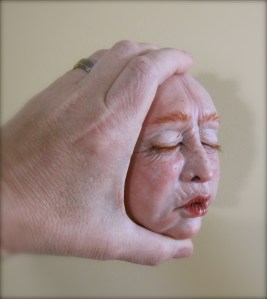
IMG_5113Hyperrealism in sculpture blurs the line between clay and flesh. They can be so realistic that they make some people feel uneasy. Life size wax sculptures, or even store mannequins are easier for our brains to accept, but once the sculpture is scaled down or turned into gigantic sculptures, we feel uncomfortable. Our brains have a “Does Not Compute” moment as we try to grasp what we are looking at.

Most of my sculptures tend to have elements of both whimsy and realism, but I idolize the work of some of the great Hyperrealists like Ron Mueck and Evan Penny. Inspired by their work I like to challenge myself to create hyperrealistic details in some of my sculptures. In this face, besides the expressive lines of her frown, I’ve added individual eyelashes and eyebrow hairs and painted the freckles so that they appear to be under the first layer of skin. Closer inspection and you’ll see the fine lines and texture of her skin. Stay tuned for what the finished piece will look like.

Posted in Uncategorized | Tagged , , , , , , , , , , , , , , , , , , , , , | 2 Comments

About Polymer Clay

When you think about sculpture you often think of two or three-dimensional forms carved in traditional mediums of stone or wood or cast in metal or plaster. My medium of polymer clay is still considered the new kid on the block. It’s classified as a clay but contains no natural occurring clay minerals – it’s actually polyvinyl chloride (PVC), the same material as the pipes under your sink. First developed in the 1930’s it didn’t make an appearance in the arts and crafts market until the 1980’s. Originally snubbed as a fine art medium, polymer clay can now be found in major museums and galleries around the world.

IMG_3468Polymer Clay is non-toxic and safe when used properly. It is a form of plastic and some people think of the term plasticizers and phthalates and naturally think of the health hazards associated with these chemicals. However in 2009 the US passed a law outlawing specific phthalates in children’s items. Because polymer clay is classified as a toy, the formulation was changed and phthalate esters were no longer used. Most polymer clay manufacturers had already switched to other plasticizers well before this date. Plasticizers are the chemical that is used to make a substance soft and pliable. Plastic is used in almost everything in our homes and offices and most plastics have plasticizers. Vinyl garden hoses, plastic dish ware and cutlery, your toothbrush, your shoes, even gum uses an edible version. But don’t worry – today, modern plasticizers stay locked up inside plastic, making it safe.

As with anything in life, it’s a good idea to follow a few guidelines for the safest use of polymer clay. First of all don’t eat it! As a matter of fact, don’t eat anything that’s not real food. Although it probably won’t kill you, it’s definitely not good for you. Don’t eat off of it, either. Cured or uncured polymer clay should not come in contact with food in general. Cured polymer clay is too porous to be sufficiently cleaned which can be a breeding ground for bacteria. If you are using polymer clay to create pottery – remember – it is only for decorative display.

Use tools or equipment that is dedicated to working with polymer clay. There are many kitchen tools that work really well with polymer clay like rolling pins, food processors, pasta machines and cake decorating tools. Once you’ve used it with clay, keep it out of the kitchen.

Don’t burn it! The temperature that it’s baked at should never go above 275 degrees.  If polymer clay is overheated enough or accidentally burned, the PVC will break down and release toxic fumes so it’s important that your oven temperature is correct. An oven thermometer is all you need to ensure your temperature is accurate. As long as clay is baked at the correct temperature, there are no “fumes” to worry about.  Never, ever use a microwave oven to bake polymer clay and don’t use toaster ovens – the temperature fluctuates too much and the heat source is too close to the clay. You don’t need a special oven, your regular kitchen oven is fine especially if you regularly clean it. It’s okay to cure clay and bake food in the same oven, just not at the same time.

IMG_0511There are so many things I love about this medium. It’s an oil based product so it doesn’t dry out. This means I can take my time working on a sculpture. I can create whimsical sculptures or add fine details for hyper realistic sculptures. I can play with skin tones and colours. It accepts paint. Once it’s baked it’s very strong. I can work in any size from miniature to life size. I’ve been classified as a Master Polymer Clay Artist, I guess mostly because I’ve been working with this medium for more than 20 years. My style and technique has improved and developed over the years. Some of my earlier work had a very primitive look, but with practice and persistance I’ve developed as a figurative artist. As per Malcolm Gladwell’s book “Outliers”, “You need to have practiced, to have apprenticed, for 10,000 hours before you get good.” Even American rapper Macklemore wrote a hit song about it, rapping that “the greats weren’t great because at birth they could paint, the greats were great because they paint a lot.” 

If you are interested in learning more about polymer clay and trying your hand at sculpting, I offer several classes in polymer clay, from beginner to advanced.  Polymer Clay is so versatile – many jewelry artists use it to make intricate beads and patterns. You can use it to create molds or for stamping projects, card making, creating figures, figurines, action figures, fantasy etc. It even has commercial applications and is used to make decorative parts for furniture, picture frames and more. The possibilities of polymer clay are still being explored and people are coming up with unique and creative ways to use this medium. For a full list of available workshops visit my website at http://www.saracinocollection.com

One last thing . . . in this day and age, plastics, polymers and resins are part of everyone’s life, from our homes to our cars – from our clothes and personal products to our food containers. What is important is that we all take responsibility in how we use these products and how we dispose of them. Recycle . . . recylcle . . . recycle! Recycled plastic is now being used in innovative new ways like creating building blocks for the construction of homes.

Sources: https://thebluebottletree.com/polymer-clay-safe/

Posted in Uncategorized | Tagged , , , , , , , , , , , , , , , , , , , , , , , , , , , , , , | Leave a comment

Tax Incentives for Buying Art

I’m sure you’ve walked into an office and seen some beautiful artwork on the walls or sculptures in the lobby. Did you know that if you operate a business in Canada, buying original artwork qualifies as a tax deduction provided that certain criteria are met. Primarily, the artwork must have been created by a Canadian artist, it must cost over $200 and it must be displayed where it will be seen by clients.IMG_1122

Some business owners rent art so that they can rotate and introduce different pieces throughout the year, and of course this can be used as a business expense, however investing in Canadian art can be even more beneficial from a tax point of view. Many companies take advantage of the Capital Cost Allowance (CCA) to build their own private collections. If you’re a professional or business owner, you can purchase original Canadian art, immediately claim the HST then amortize the artwork over 3 to 5 years.

IMG_9623This is definitely something worth talking to your accountant about. Not only would you be surrounding your work space with beautiful artwork and building a valuable asset for your business, but you would be supporting and encouraging Canadian artists. One more thing – don’t limit yourself to just paintings on the wall, add a few sculptural pieces and your office will cover all three forms of visual art.

Visit my website at http://www.saracinocollection.com or my facebook page at http://www.facebook.com/saracinocollection


Posted in Uncategorized | Tagged , , , , , , , , , , , , , , , , , , , , , , , , , , , , , , , | Leave a comment

Surround Yourself with Passionate People

Spending time with people who are passionate about what they do is like therapy for me. They inspire me, make me want to create new things, dream bigger and live on a new level altogether. Most importantly, they remind me that my dreams are reachable. For them business and passion-work is not a means for making a living but a way of life. These people thrive off the impossible. (liveyourlegend.net)

Over the last few weeks I’ve had the opportunity to meet, work and share passions with new friends who have inspired me tremendously. How they entered my life is a story in itself and a perfect example is Robin May. There are three very significant people in Robin’s life who are courageously battling cancer. Feeling helpless, Robin began to envision a way that she could support and perhaps offer hope to patients dealing with this terrible disease. Not knowing where to start, she went to Chapters and began looking through some magazines, one of which happened to be about polymer clay. Another customer noticed and struck up a conversation thinking that Robin was familiar with polymer. This customer had taken part in a class I offered through the Gallery on Gore in Perth and after IMG_1134hearing Robin’s story referred her to me. When Robin called looking for help with her idea I invited her to take part in a test class, after which we set up a private lesson to help realize her vision.

Her vision . . . Bottles of Hope . . . tiny bottles that contain a message of hope and positivity, decorated with polymer butterflies, cane patterns and flowers. She just delivered the first batch of 27 bottles to the Breast Cancer Action group last Thursday! She’s also making them for the equivalent organization in Montreal.

Then there’s Lois Siegel . . . I met her at the Orange Art School. She was taking another instructor’s class, but popped into my classroom and asked if she could take a class with me in my studio. We exchanged business cards and soon she was booked into one of my in-studio beginner classes to sculpt a Pot Troll.

mariaworkshop1smallLois asked if she could take some photographs of me in my studio and with some of my work. She has a current exhibit of her photography at the Ottawa Bagelshop and Deli at 1321 Wellington Street, but she is also currently working on a new exhibit of photographs of artists in their studio environments. I was honoured, and the photos are fabulous – she made me feel at ease and one of them is my new profile photo on facebook. But what’s even more incredible about Lois is her passion for art and for life. Her career spans over 35 years – a photographer, filmmaker and writer just to name a few, she’s won a Genie for her documentary “Baseball Girls” (http://www.siegelproductions.ca/lois/films.htm) , she’s been named one of the Capital City’s Top 50 People who are shaping the future of the National Capital, by Ottawa Life Magazine. (Check out this Vistek post from a 2015 exhibit at http://prophotoblog.ca/community/in-store-gallery/ottawa-photographer-lois-siegel/) and she’s won national and international awards and assignments.

trolls2smallWhat Lois took from my studio was a Pot Troll and a few photos, but what she left behind was renewed passion and inspiration that has fuelled a two day sculpting binge with more to come.

This blog post has made me think about all the people who have enriched my life, who have offered support, inspiration and have been role models. It’s their passion that has influenced me and I hope in some way I am able to do the same for others.


Posted in Uncategorized | Tagged , , , , , , , , , , , , , , , , , , , , , , , , , , , , , , | Leave a comment

Creative Summer Fun!

Screen shot 2016-06-22 at 1.59.32 PMThe kids are home for the summer. Are you looking for things you can do together to keep them busy without defaulting to television and electronics? Or maybe a little something for you to do to get away from it all. How about art classes in polymer clay? Polymer Clay is an ideal medium for both kids and adults – it doesn’t dry out until you bake it – there’s no mess, and you don’t need any special equipment – just your regular kitchen oven. It’s non-toxic, easy to use and a lot of fun.

I’m offering four in-studio projects this summer. All four projects are 3 hour beginner classes and everyone leaves with a finished sculpture. All supplies and tools are included.

Art classes are becoming more and more popular as a way of disconnecting from technology, calming our minds and rediscovering our creative sides. Space is limited so book soon, or get in touch about booking a private art party in your home. Put a group of six or more friends together and I bring everything to you.

Get in touch via email at maria@saracino.ca or give me a call at 613-425-1729


Posted in Uncategorized | Tagged , , , , , , , , , , , , | Leave a comment

The Ultimate Selfie . . . A MINI !

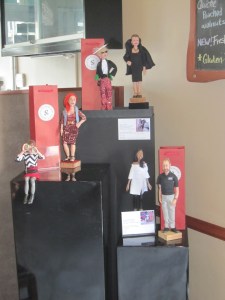
IMG_3985Historically an aristocratic tradition, today, getting your portrait done is more than an exercise in vanity it’s an opportunity to be a part of the artistic process. On Tuesday night, I unveiled a series of mini portrait sculptures interpreting the street fashion photography of Katie Hession from YOW City Style. Although easily recognizable, these 12-14″ figurative sculptures are also about capturing the personality and essence of the subject. Christened the YOW MINI, these little mini portraits are the Ultimate “Selfie”. This unique collaboration of art and street fashion made the evening a huge success.

 “Andy Warhol’s portraits in the 1960s mark the last time the genre of IMG_4727portrature could have conceivably been called avant-garde—and yet the best portrait painters and sculptors are still highly sought after, charging massive sums, and commanding profound respect among the very wealthy. It’s a prolific segment of contemporary art that’s been hiding in plain sight for years.” James Tary, 2015 http://www.bloomberg.com

Screen shot 2016-06-09 at 3.37.44 PM IMG_4730 IMG_4725Those of you who are familiar with my work know that I am best known for my realistic yet whimsical figurative sculptures. I try to capture those everyday moments in time that feels familiar and that we can connect with on a personal level. My medium is polymer clay and textiles. I like to say that I channel Norman Rockwell’s illustrative style through sculpture. My usual portrait commissions are in the 20-24″ size and take anywhere from 30 to 50 hours to complete. However, the YOW MINI is a condensed, more affordable version. Only $500 they are the ultimate gift to mark those special birthdays, anniversaries or milestones, or simply . . . the ultimate “selfie” to celebrate you.

http://www.saracinocollection.com

http://www.facebook.com/saracinocollection

#mariasaracinoca

IMG_4718


Posted in Uncategorized | Tagged , , , , , , , , , , , , , , , , , , , , , , , , , , , | 1 Comment