Women of Distinction

rosie2I was recently asked to contribute a figurative sculpture to the Women of Distinction Breakfast in support of the United Way women’s SPARK Giving Campaign in Ottawa. I’ve given a lot of thought to what character would be appropriate and relatable for this group of powerful, community-minded women. The image that kept coming to mind was J. Howard Miller’s wartime poster  “We Can Do It!” Here’s my version – she’s 17″ tall and is sculpted from polymer clay and textiles. Hanging from her belt is a hand crafted saw from Germany and her hair is made from a fine cotton wool from Italy.

“We Can Do It!” is an American wartime propaganda poster produced in 1943 for Westinghouse Electric as an inspirational image to boost worker morale. The po1941-45-rosie-the-riveter-55ster is generally thought to be based on a black-and-white wire service photograph taken of a Michigan factory worker named Geraldine Hoff.

The image was rediscovered and was used to promote feminism and other political issues beginning in the 1980s. It was also called “Rosie the Riveter” after the iconic figure of a strong female war prod51735uction worker.  The image made the cover of the Smithsonian magazine in 1994 and was fashioned into a US first-class mail stamp in 1999. It was incorporated in 2008 into campaign materials for several American politicians, and was reworked by an artist in 2010 to celebrate the first woman becoming prime minister of Australia. Here’s the campaign poster for Australian President, Julia Gillard as Rosie the Riveter.


220px-RosieTheRiveter

Norman Rockwell also create a version of “Rosie the Riveter” which appeared on the cover of the Saturday Evening Post on Memorial Day, May 29, 1943.

From politicians to Beyonce, from war to feminism, Rosie has been an art icon around the world and a symbol of women’s rights.                   Go Girl Power!

You can read the whole story of Rosie the Riveter at http://www.pophistorydig.com/topics/rosie-the-riveter-1941-1945/
Posted in Uncategorized | Tagged , , , , , , , , , , , , , , , , , , , , , , , , , , , , , , | Leave a comment

How Long Does It Take

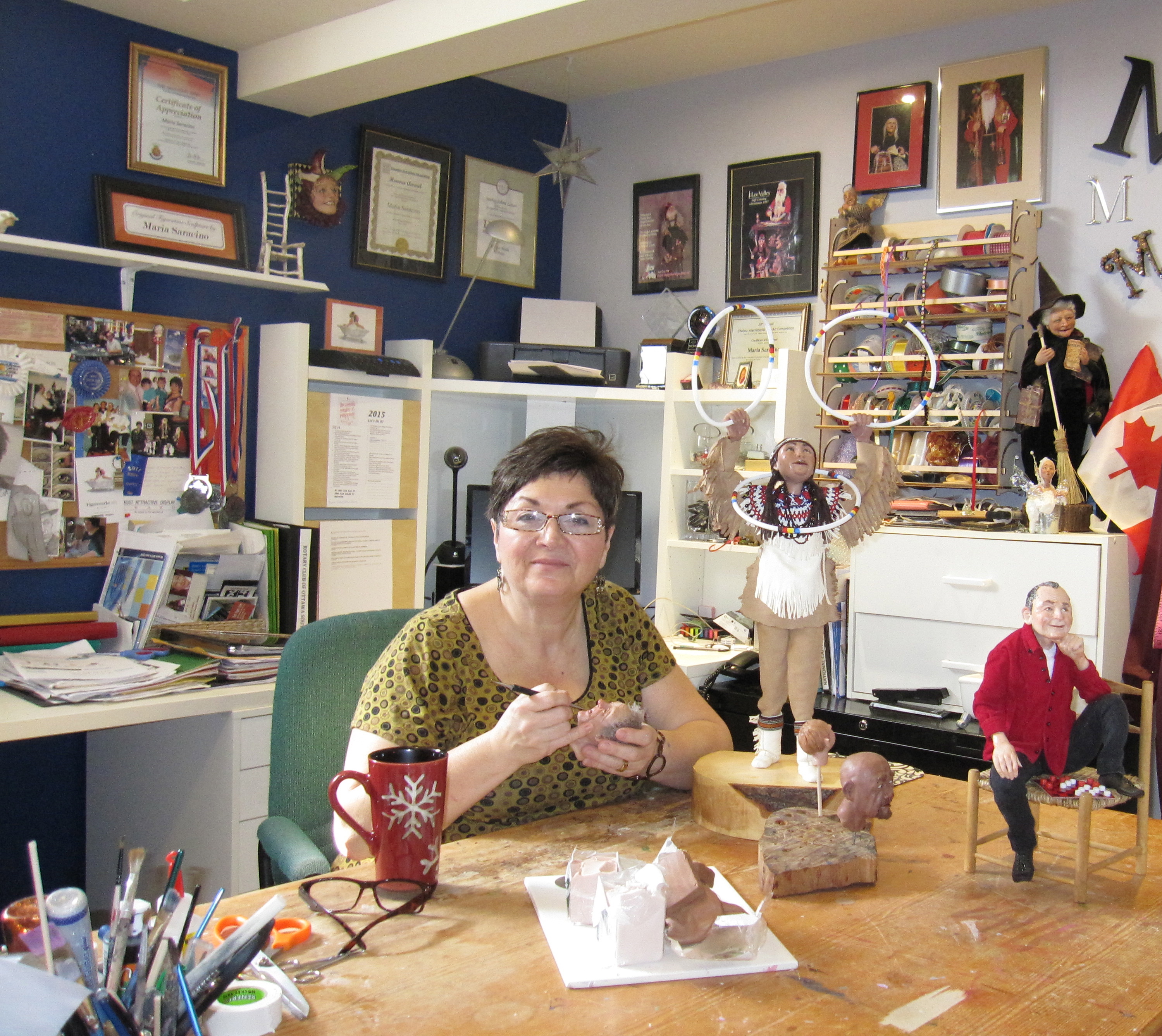
IMG_1243The month of February has been a whirlwind of activity and excitement. I had a successful first time solo exhibit at the Orange Art Gallery and the chance to meet so many new people who have been curious about polymer clay. That’s been great because next to creating art, I love talking art, explaining the medium, the process and the inspiration behind what I do. The question asked most often by just about everyone is “how long does it take to make one of my sculptures?” Here’s the answer and the topic of this week’s post.

I hardly ever start and finish one piece at a time. Usually there are at least three sculptures on the go in various stages of completion, spread out over the course of several weeks. A start to finish estimate would be 20 hours for a single character or up to 60 hours for a more complicated multi-character piece. There are some variables that require more time, for example if I’m making furniture or accessories, or if the positioning is difficult. But next to the actual sculpting, creating the body and the costuming is the biggest chunk of time spent on the sculpture.

One of the reasons I work on several pieces at the same time is because I need to walk away from the sculpting or the composition and look at it again with fresh eyes. This is especially true with portraits or commissions – that’s why I always ask for 4 to 6 weeks to complete a commission. When I’m so focused on a task, like most people, I get tunnel vision. By taking the time to step away and come back to a sculpture I can see what needs to be tweaked or changed and often it’s so glaringly obvious that I can’t believe I missed it earlier. The other issue is deciding when the piece is finished. Most times a sculpture will remain on my work table for at least one more day after I first think it’s finished. This gives me a chance to give it one more look over and touch up before it’s moved out of the workshop completely.

If there are few distractions, I can usually create 4 to 6 new sculptures in a month. My studio is in my home, and it’s equipped with a TV, music, computer and telephone, so it’s very comfortable to spend a lot of time there. I work on average 10 hour days. I say the word “work” very loosely because it’s not work for me . . . I’m very grateful to have found my passion and to be able to do this full time.

Posted in Uncategorized | Tagged , , , , , , , , , , , , , , , , , , , , , , , , , , | Leave a comment

First Impressions

People always ask me where I get my ideas from. Of course, as part of the baby boomer generation, my own experiences often come into play, afterall, my husband and I pretty well line up with the trends and patterns of the largest demographic group in North America. I think that’s why “The Selfie” was so familiar for people who saw it – it resonated with my generation and the generation ahead of us who are trying to make sense of the technology revolution.

However, the most abundant source of ideas comes from simply observing. These observations go in my “Idea Vault” and sooner or later become the next sculpture.

First Impressions“First Impressions” and “Retail Therapy” are examples.

With shows like The Apprentice, Dragon’s Den and Shark Tank, as well as a slew of successful young entrepreneurs, a new generation has evolved that follows the mantra of “look successful and you will be successful”. What you wear, what you drive, where you live will all impact the trajectory of your life.       Today’s 30 somethings have sophisticated tastes in clothes, cars, food, wines, travel and just about everything. Technology has opened the doors and exposed all of us to things we would have never known only a short time ago.

4Retail Therapy is another piece that describes our fascination with “things”. I’ll admit I love shopping and I love a good bargain, but today’s consumer is obsessed with labels and status. Some people call it the Kardashian effect. The opening of the Tanger Outlets in Ottawa was proof with opening day traffic jams that blocked off the Queensway. That was the inspiration behind Retail Therapy. People are definitely more in touch with fashion, accessories and my weakness – shoes.  This is not necessarily a bad thing – one less person wearing pyjama pants to the grocery store is okay with me.

A new observation that has developed from this very trend in consumerism is the need and lack of skilled tradesmen. Recent reports indicate the shortage is at an all time high and is the next Canadian crisis. Apprenticeship training and certification are more in demand than ever and the opportunity for women in the trades is growing.

There you have it . . . the “Idea Vault” just got a new deposit.

Posted in Uncategorized | Tagged , , , , , , , , , , , , , , , | Leave a comment

Life’s Simple Pleasures

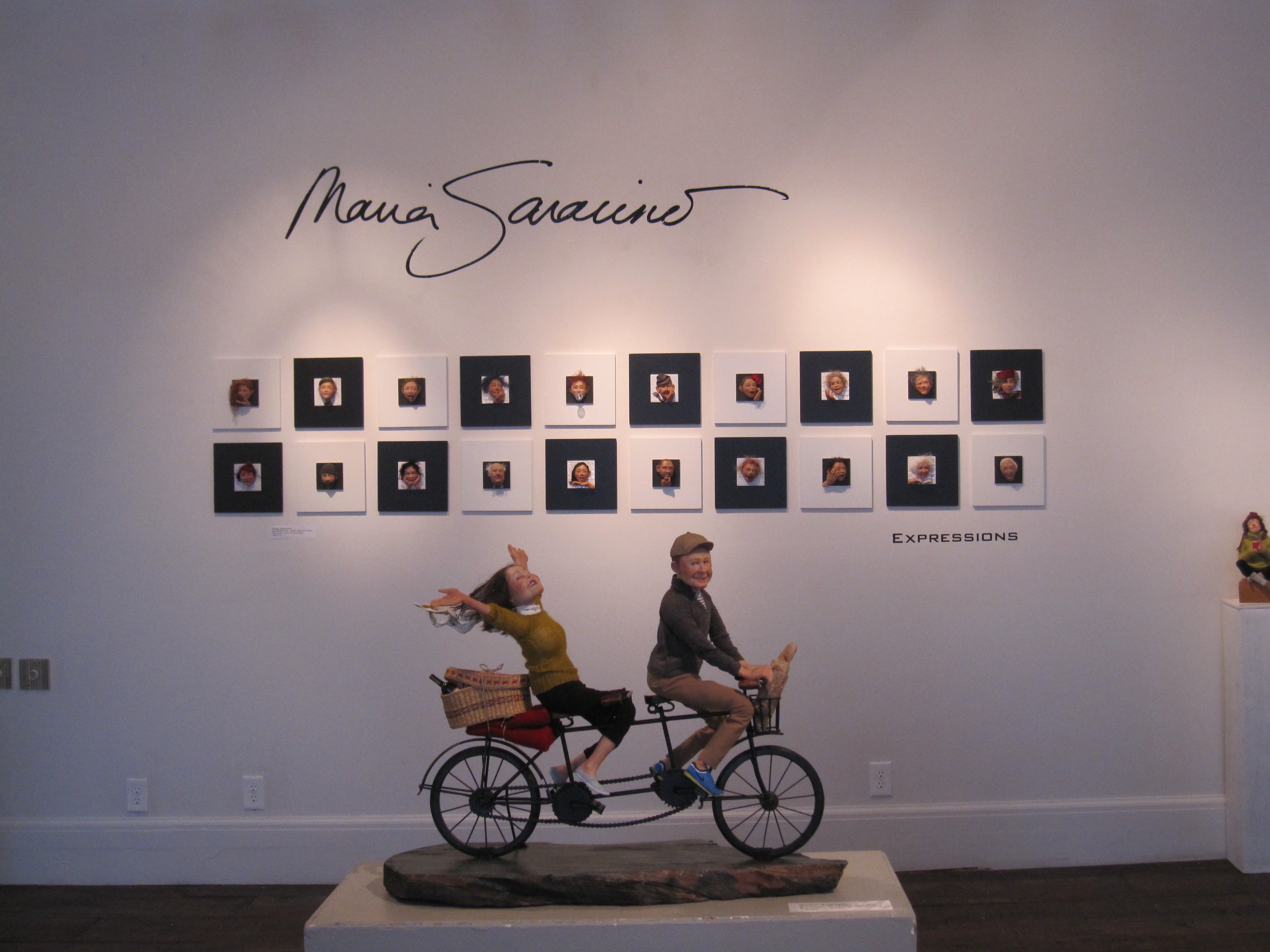
1Tonight is the opening of my solo exhibit at the Orange Art Gallery in Ottawa. Months of planning and long hours in my studio have gone into this exhibit. The result . . . I will be presenting a collection of 24 original sculptures, 12 of which are brand new, never been displayed. Also included in the exhibit are a series of 20 relief portraits called “Expressions” and 12 small characters in the “Life’s a Swing” Series. All the pieces fit in with the theme . . . “Life’s Simple Pleasures”. I’m hoping this three week exhibit will brighten our outlook and lift our spirits during the winter doldrums. Some of the sculptures in the collection are also part of a sub-theme on Romance and cover everything from young love to love remembered.Vernissage

If you haven’t checked out my facebook page, please take a look and like the page – photos of the opening will be up tomorrow as well as more photos of the sculptures. http://www.facebook.com/saracinocollection

You can also preview some of the new pieces at http://www.orangeartgallery.ca

Now I’m off to get ready for the ball – look for my updates tomorrow!

opening

Posted in Uncategorized | Tagged , , , , , , , , , , , , , , , , , , , , , , , , , , , , , , , , , , , | Leave a comment

It’s Carnival Time!

IMG_7564If you are from New Orleans, Carnival season starts right after the Epiphany on January 6th, with most of the celebrations concentrated in the two weeks leading up to Fat Tuesday. In Brazil, Venice, even in Quebec City, Carnival runs from January 31st to February 17th, 2015, the last day before Ash Wednesday and the beginning of Lent. This day is also known as Shrove Tuesday, Fat Tuesday, Mardi Gras, Pancake Tuesday and Giovedi Grasso to name a few.

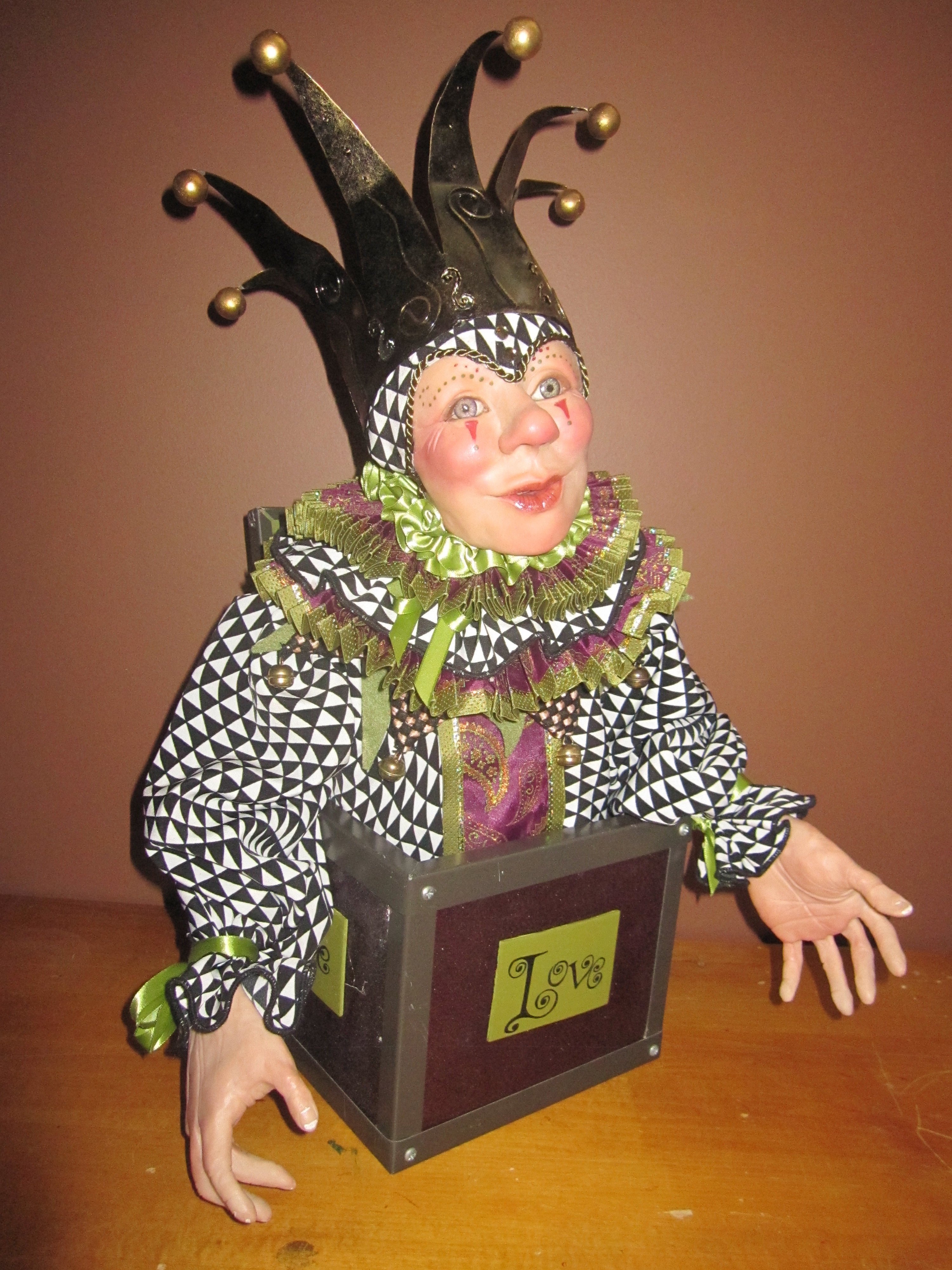
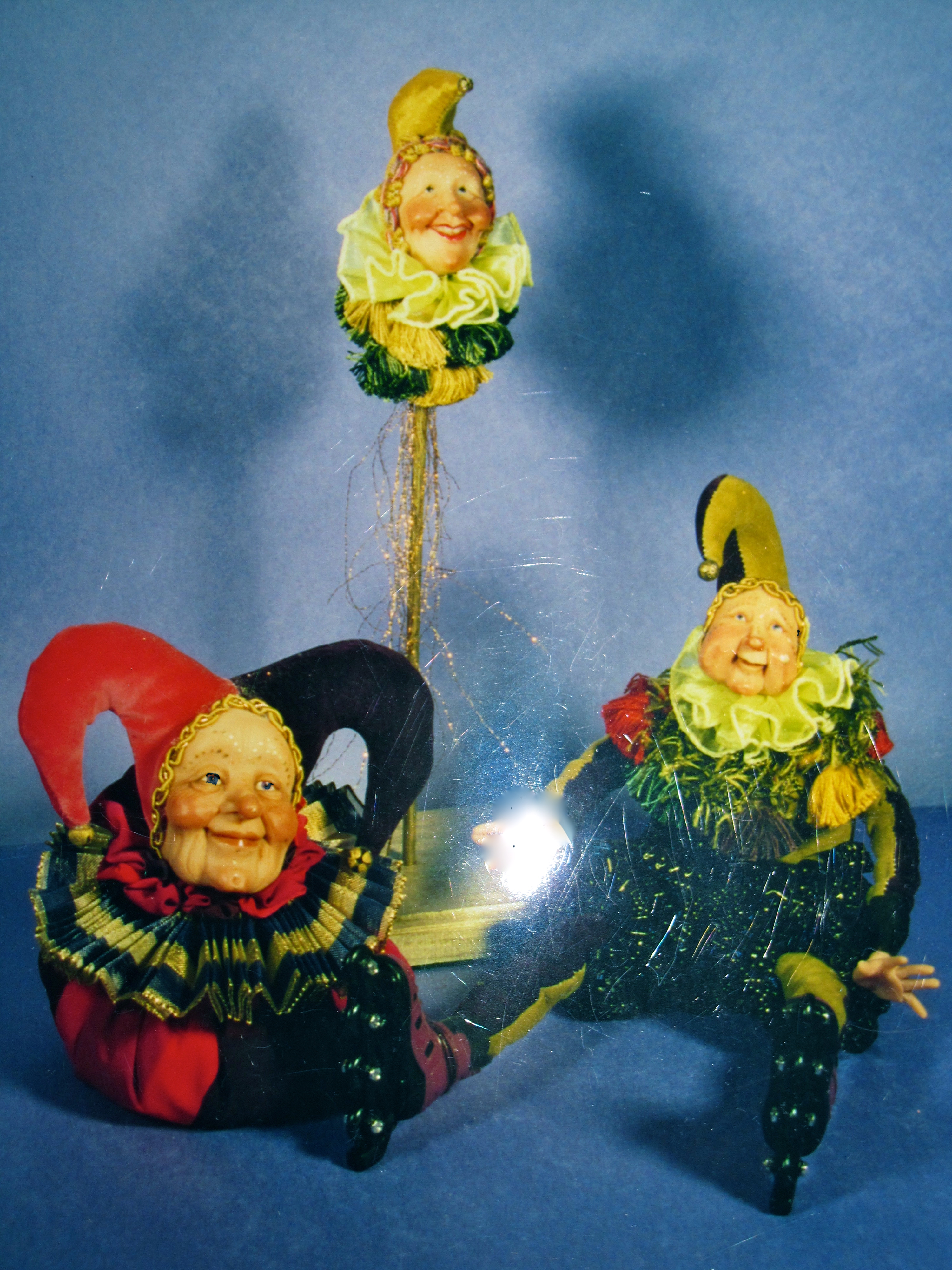
Carnival is a time to celebrate and have fun. A common character during this period is the jester. Their hats, sometimes called the cap ’n’ bells or cockscomb are usually floppy with three points each of which there’s usually a jingle bell at the end. The three points of the hat represent the donkey’s ears and tail worn by jesters in earlier times.

IMG_1058In societies where freedom of speech was not recognized as a right, the court jester – precisely because anything he said was by definition “a jest” and “the uttering of a fool” – could speak frankly on controversial issues in a way in which anyone else would have been severely punished for, and monarchs understood the usefulness of having such a person at their side. Jesters could also give bad news to the King that no-one else would dare deliver.

IMG_7431In literature, the jester is symbolic of common sense and of honesty, notably King Lear, the court jester is a character used for insight and advice on the part of the monarch, taking advantage of his license to mock and speak freely without worrying about being thrown in the dungeons or even executed. Only as the lowliest member of the court can the jester be the monarch’s most useful adviser.

IMG_1057These are some of the jesters I’ve made over the years.

Happy Carnival!!

Posted in Uncategorized | Tagged , , , , , , , , , , , , , , , , , , , , , , , , , , , , | 1 Comment

Valentine’s Day

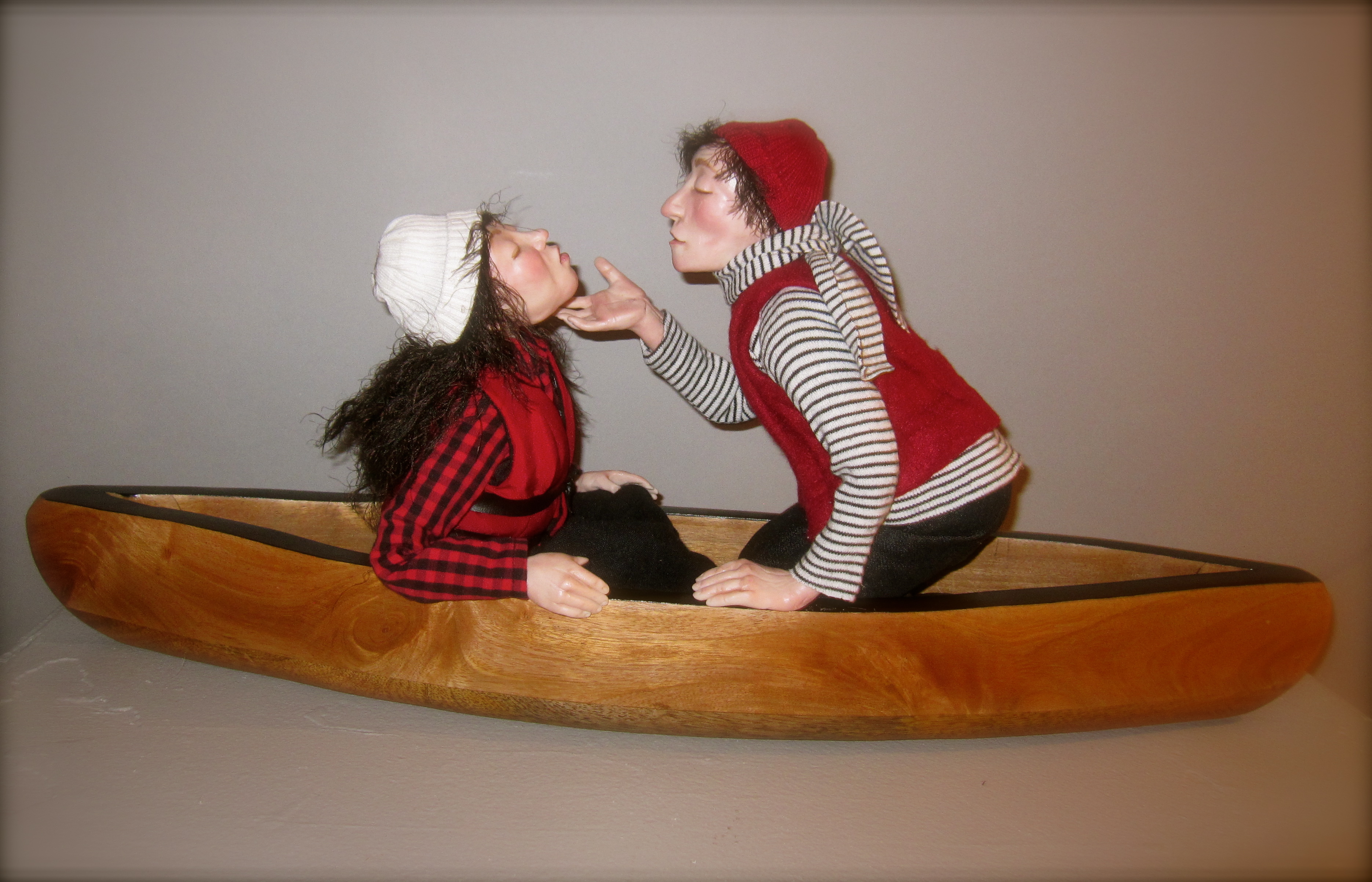
With Valentine’s Day less than a month away, I’ve included the subject of romance in my exhibit at the Orange Art Gallery in February. Afterall, one of life’s simple pleasures are those beautiful, spontaneous, heartfelt romantic gestures that make you fall in love with your partner all over again.

IMG_0368

The modern St. Valentine’s Day celebrations are said to have been derived from both ancient Christian and Roman tradition. As per one legend, the holiday originated from the ancient Roman festival of Lupercalis/Lupercalia, a fertility celebration that was observed annually on February 15. But the rise of Christianity in Europe saw many pagan holidays being renamed and dedicated to early Christian martyrs. Lupercalia was no exception. In 496 AD, Pope Gelasius turned Lupercalia into a Christian feast day and set its observance a day earlier, on February 14. He proclaimed February 14 to be the feast day in honor of Saint Valentine, a Roman martyr who lived in the 3rd century. It is this St. Valentine whom the modern Valentine’s Day honours.

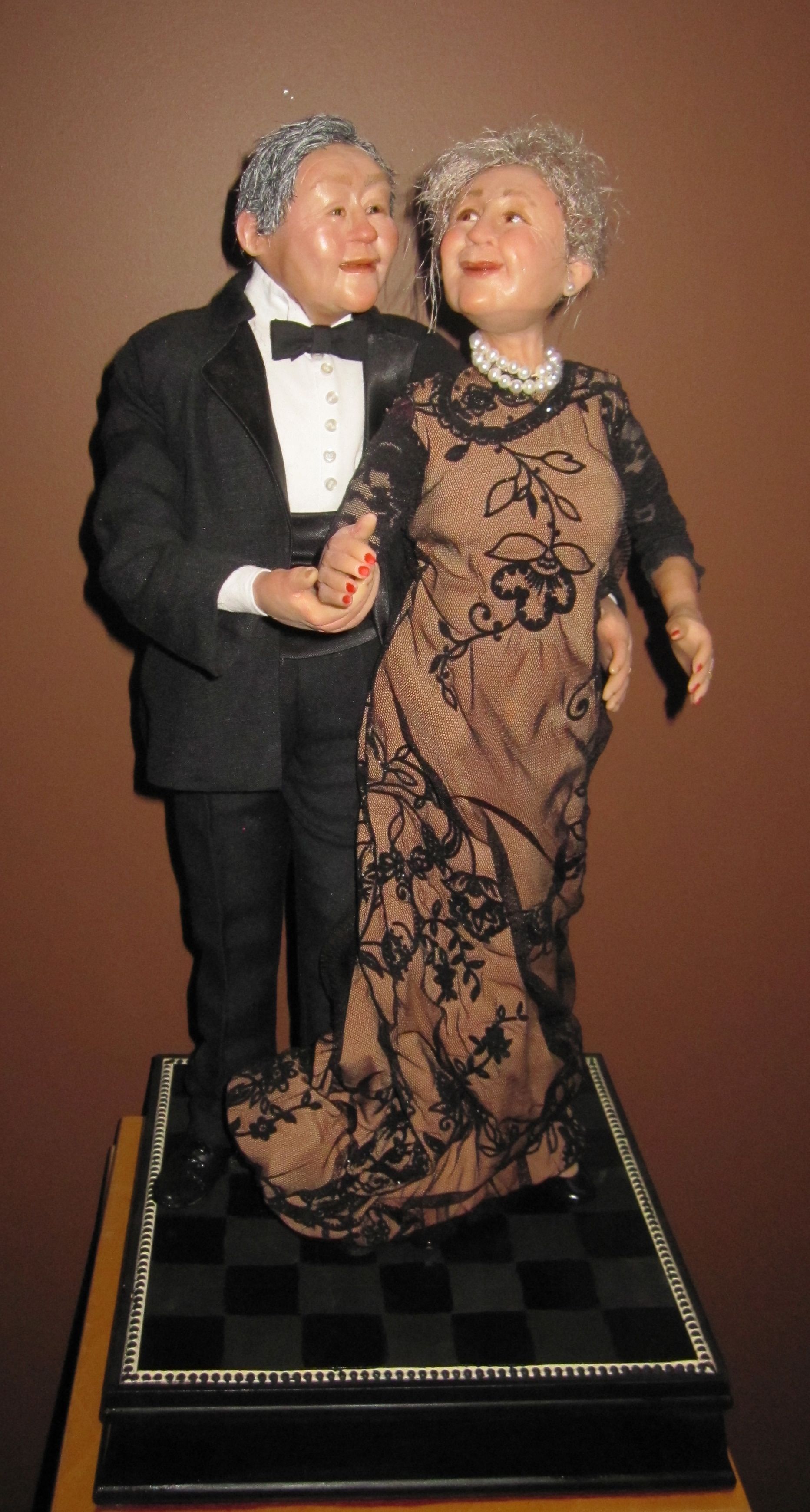
Anniversary DanceFor the exhibit I’ve created five sculptures that explore the topic of love and romance, from young, new love to a nostalgic look back at what was once a great love.

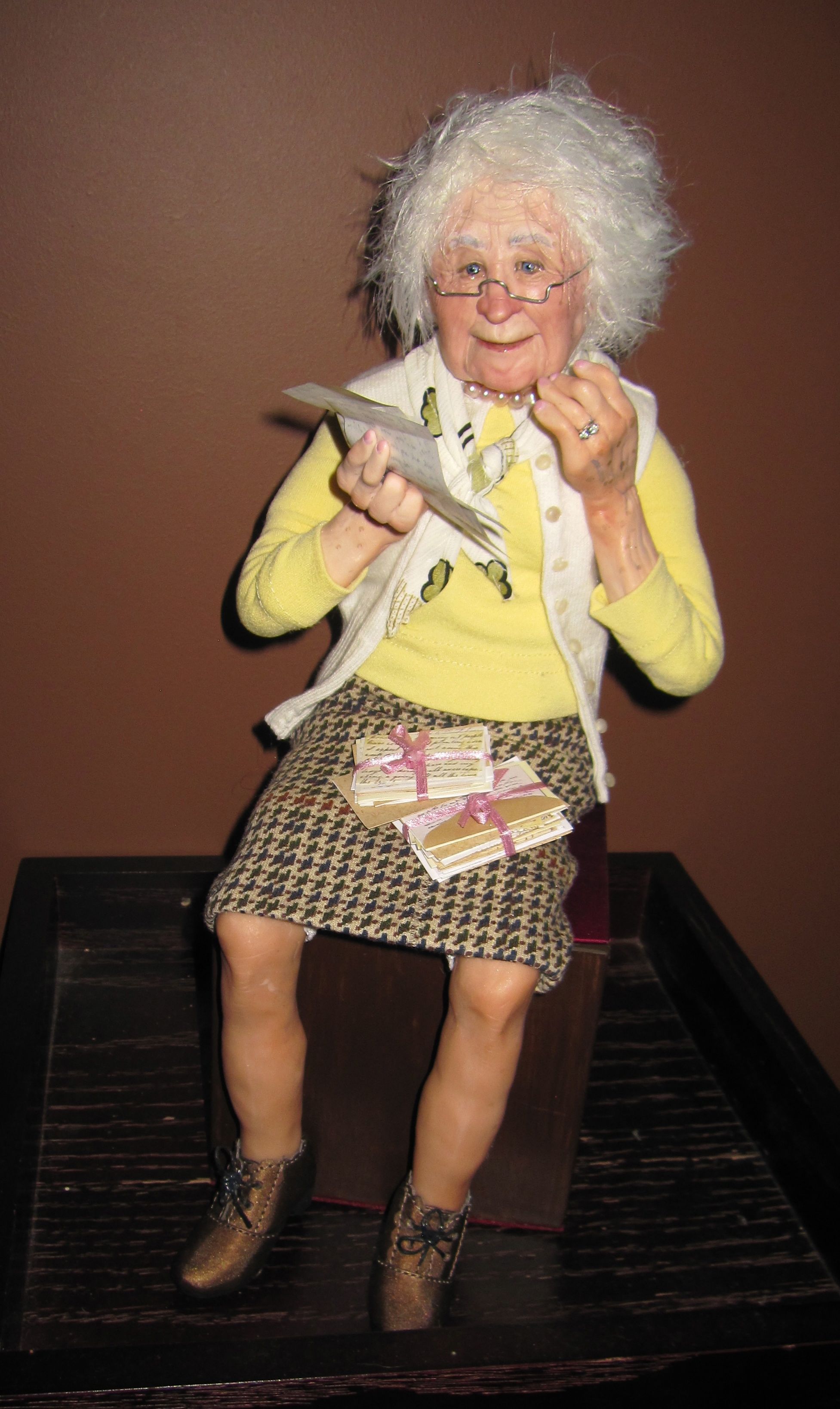
Love Letters

For more information on the exhibit “Life’s Simple Pleasures” please visit the gallery’s website at http://www.orangeartgallery.ca

Photos

  • Canoedelling
  • The Anniversary Dance
  • Love Letters
Posted in Uncategorized | Tagged , , , , , , , , , , , , , , , , , , , , | Leave a comment

Life’s Simple Pleasures Exhibit

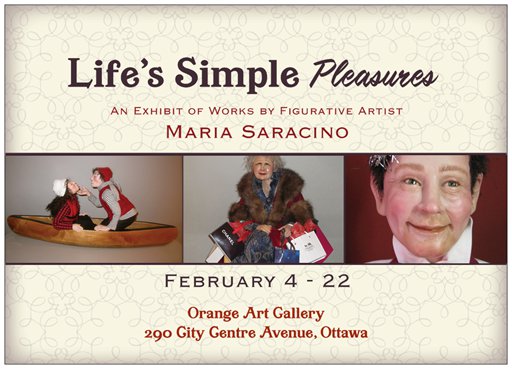
lp-2The Orange Art Gallery in Ottawa, Ontario is hosting an exclusive exhibit called “Life’s Simple Pleasures”. From February 4 to the 22nd, the gallery will be showcasing over 30 sculptures by Maria Saracino that celebrate the simplicity and rewards of everyday life. With Valentine’s Day landing right in the middle of the exhibit, there will be a collection of works that fall in the “Romance” sub category – after all, romance is one of life’s sweetest simple pleasures.

Love Letters

Here’s an example from the Romance collection. This piece is called “Love Letters”. 15″ tall, this character is reminiscing over the letters of her young beau. Many years have passed, but the words still bring her back in the moment.

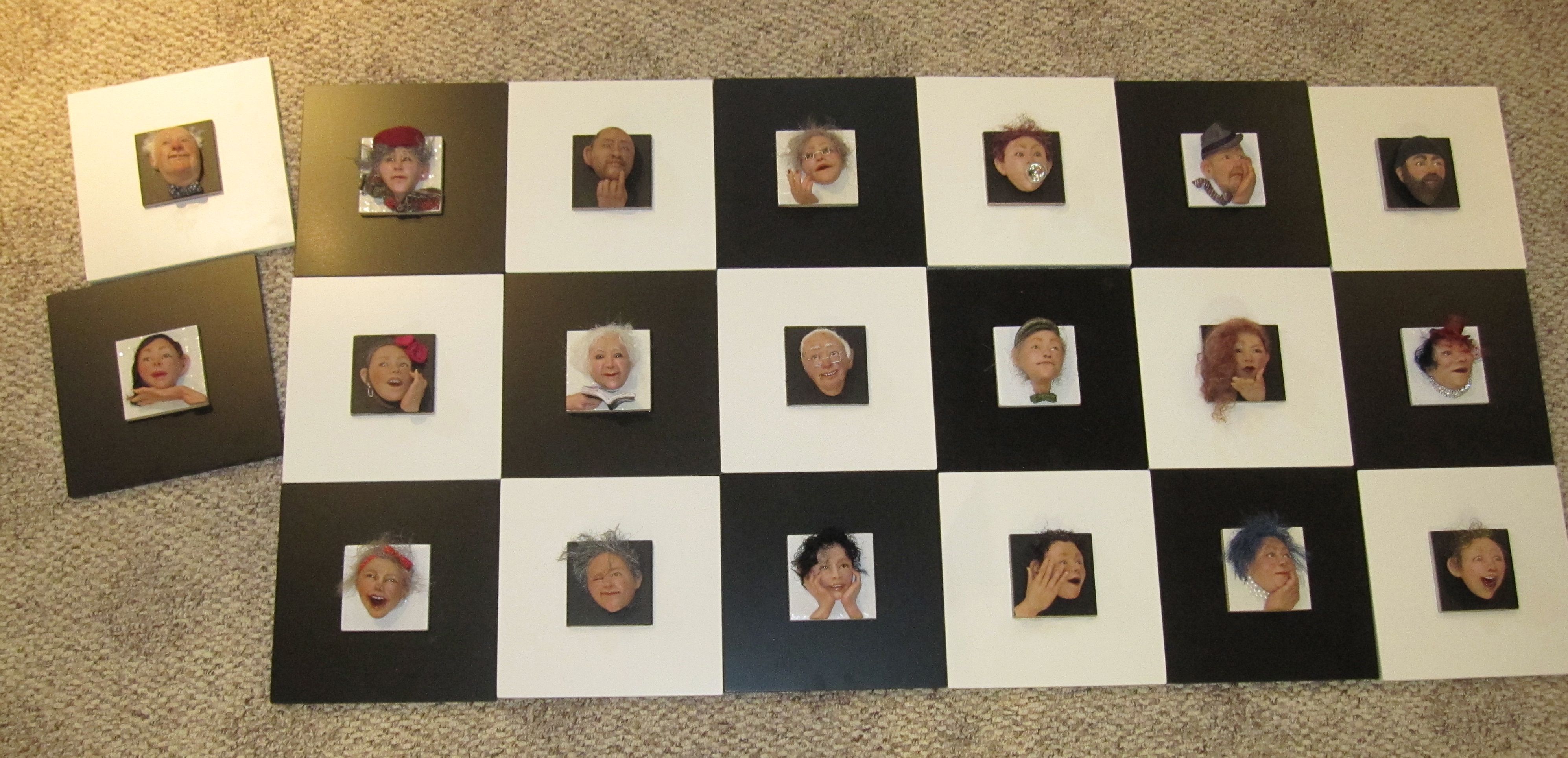
Also included in the exhibit is a series of 20 relief sculptures called “Study of Expression”. Here’s a picture of the series, but it’s even better in person. Each portrait is sculpted directly on a tile that sits in a 10″ x 10″ frame. Whimsical characterizations of the people in our lives, if you have the opportunity to visit the gallery you’ll probably recognize some of them. There’s even an example of a portrait commission in this series.

Study in Expressions 2

Maria will be doing a demonstration and offering some hands-on mini-workshops on the first Saturday of the exhibit, February 7th from 1 to 5pm. I hope you can make it, but for those of you who live too far, keep checking this blog and the various social media sites for photos of the new pieces.

http://www.saracinocollection.com             http://www.facebook.com/saracinocollection   http://www.orangeartgallery.ca

lp-3


Posted in Uncategorized | Tagged , , , , , , , , , , , , , , , , , , , , , , , , , , , , , , , , | Leave a comment

Figurative Art

I recently discovered an artist website located at http://www.figurativeartist.org Naturally the name intrigued me and after learning more I applied to become a member. This is a juried and curated site and I’m very honoured to have been accepted to be part of this group of artists.fig-logo210B1 The site is devoted to creating connections between artists and collectors, galleries, students and art lovers. The art of the human form united this talented group of contemporary international figurative artists. A few of my favourite figurative sculptors are presented here, including Joe Fafard, Richard and Jodi Creager and a new discovery for me, Zarko Baseski. You can find me on this site in the alphabetical listings or on the Gold Artist Listing for Sculptors.

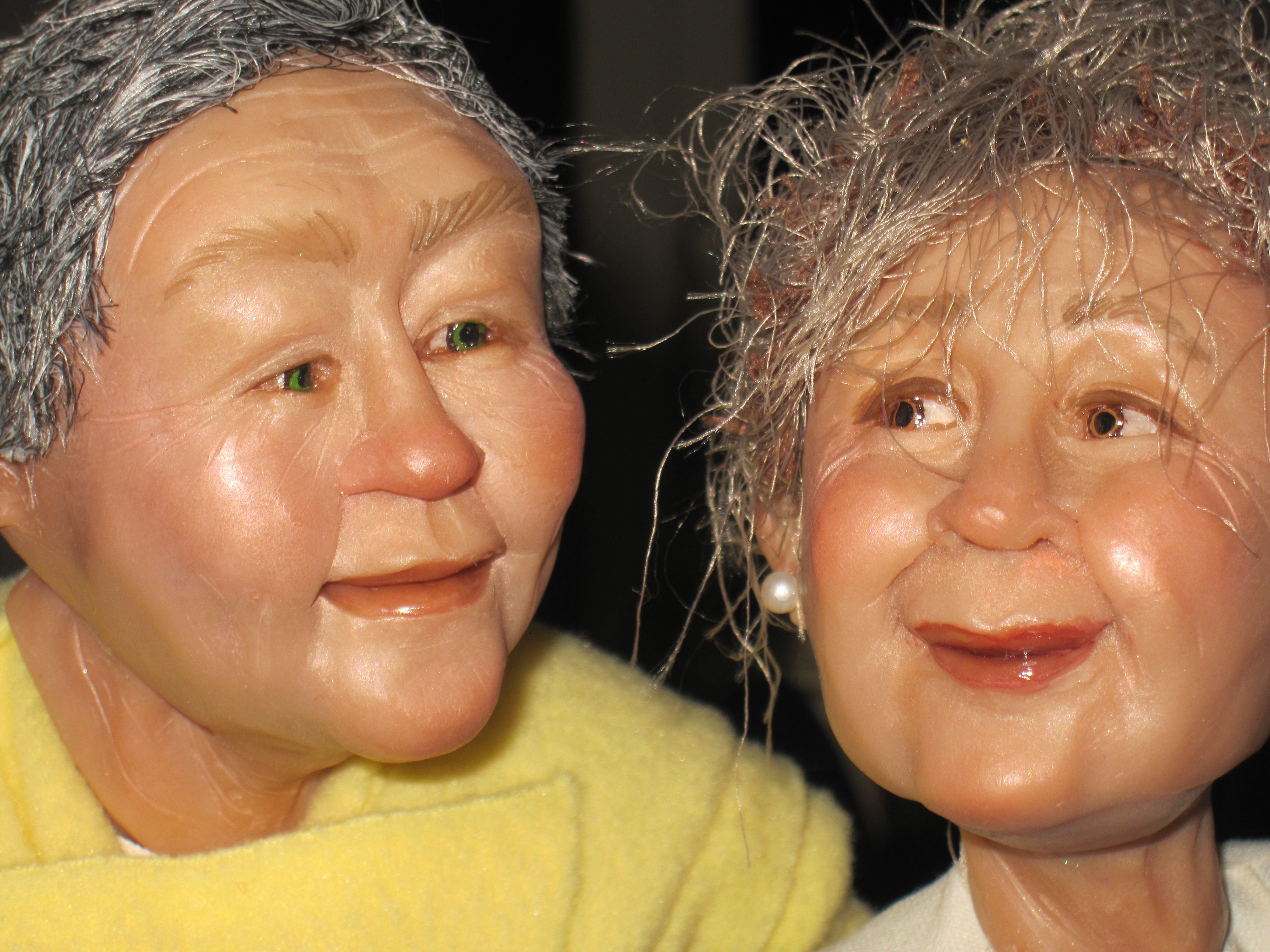
The human figure has always been a common subject of visual art. The earliest known representations of the human body come from Europe and date to between 25,000 and 12,000 years ago. In almost all cultures around the world the human figure remains central to both spiritual and decorative art to the present day. When I first started sculpting in polymer clay, almost 20 years ago, I focused on getting the facial features and the body proportions right, but the characters sometimes were stiff and lifeless. Since then anniversary danceI’ve concentrated on the emotional connection and giving the illusion of catching people in a candid moment in time. I want the audience to see and feel something familiar, something that reminds them of their own experience.

This is a work in progress called “The Anniversary Dance” which will be part of the “Life’s Simple Pleasures” exhibit at the Orange Art Gallery in February 2015.

Scrolling through the Figurative Artist’s website I was happy to see a quote by Norwegian expressionist painter Edvard Munch because I have this on my studio wall as inspiration  –  “No longer shall I paint interiors with men reading and women knitting. I will paint living people who breathe and feel and suffer and love.” This quote is a reminder to be conscious of the story behind the sculpture and to find a way for the audience to see it too . . . sometimes I get it right.

Posted in Art, Art Awards, Art Dolls, art exhibits, Art shows, Artists, Figurative Art, polymer clay, Uncategorized | Tagged , , , , , , , , , , , , , , , , , , , , , , , , , , , | 3 Comments

The Legend of La Befana

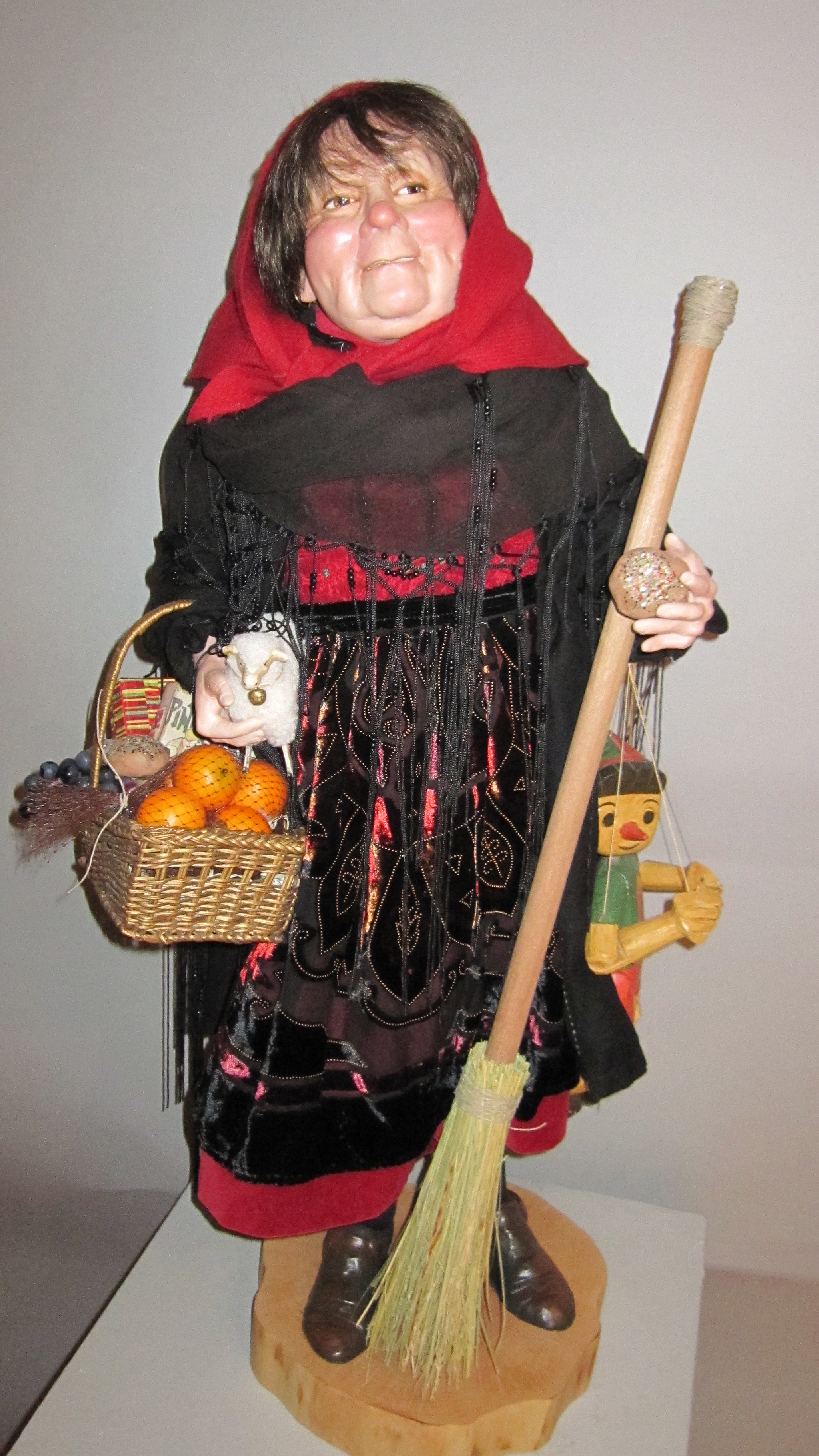
IMG_0171Like children everywhere, Italian kids look forward to the arrival of the red-suited Babbo Natale on Christmas Eve. However, this relatively modern tradition pales in comparison to the anticipation generated by the arrival of an old witch in early January. On the eve of the Epiphany, the old, tattered and soot-covered Befana flies around the world on a broomstick and comes down chimneys to deliver candy and presents to children who have been good during the year. For those who have fallen a bit short of model behavior, la Befana will leave lumps of coal.

psza619La Befana has been an Italian tradition since the thirteenth century and comes from Christian legend rather than popular culture. Although there are several versions of her story, my favorite is that la Befana was one of the inn keepers who turned Mary and Joseph away on their way to Bethlehem. Later she was approached by the Three Wise Men who asked her to lead them to the stable where the baby Jesus lay in a manger. La Befana was too busy cleaning her house at the time (that’s why she carries the broom), so she declined the offer to go with them. Very soon she realized that she had made a huge mistake, so she gathered up a bag full of gifts and sweet treats and set off alone in search of the baby Jesus. Though she followed the same star as the Magi, she was unable to find the stable. Undaunted, la Befana continues to travel the world over to this day searching every house for the Christ child, leaving gifts for kids along the way. On January 6, the first day of Epiphany, Italian children hold their breaths as they search their stockings for a sign that they have been good that year.

Instead of milk and cookies, Italian families often leave her a glass of wine and a plate of sausage and broccoli.  The arrival of la Befana is celebrated with traditionnight_befanaal Italian foods such as panettone (a Christmas cake) and marks the end of the long and festive holiday season in Italy. In Italy there is a saying ” L’Epifania che ogni festa si porta via” which roughly translated means “The Epiphany takes away all festivity”.

A beautifully illustrated new children’s book by Maria and Isabella Centofanti has recently been released that tells La Befana’s story. It’s available at http://www.italianchildrensmarket.com

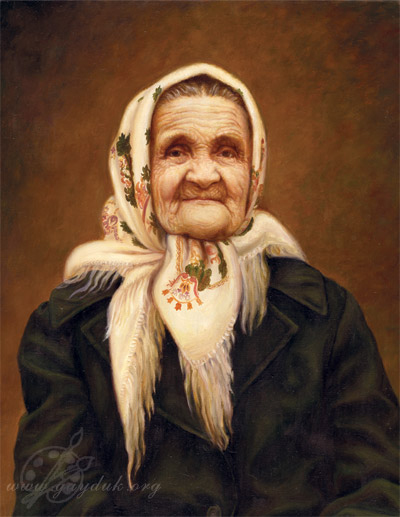
babushka_2And she’s not just Italian; in a similar Russian folk tale, an old woman who declines traveling with the Magi and then follows them afterward is dubbed Babushka. Although they look similar, the word babushka refers to an elderly woman. Babushkas in Russia seem to represent a totally independent part of society – they know everything and are good at giving a piece of advice whether you’ve asked for it or not. Here’s a beautiful portrait called “Babushka”, by Russian Artist Irina Gaiduk

Excerpts from this blog are taken from http://monteverdituscany.com and http://www.slate.com

Don’t forget to visit and like my facebook page. Check it out at http://www.facebook.com/saracinocollection or my instagram page at mariasaracinoca


Posted in Uncategorized | Tagged , , , , , , , , , , , , , , , , , , , , , , , , , , , , , , , , , , , | 8 Comments

It’s Christmas Time

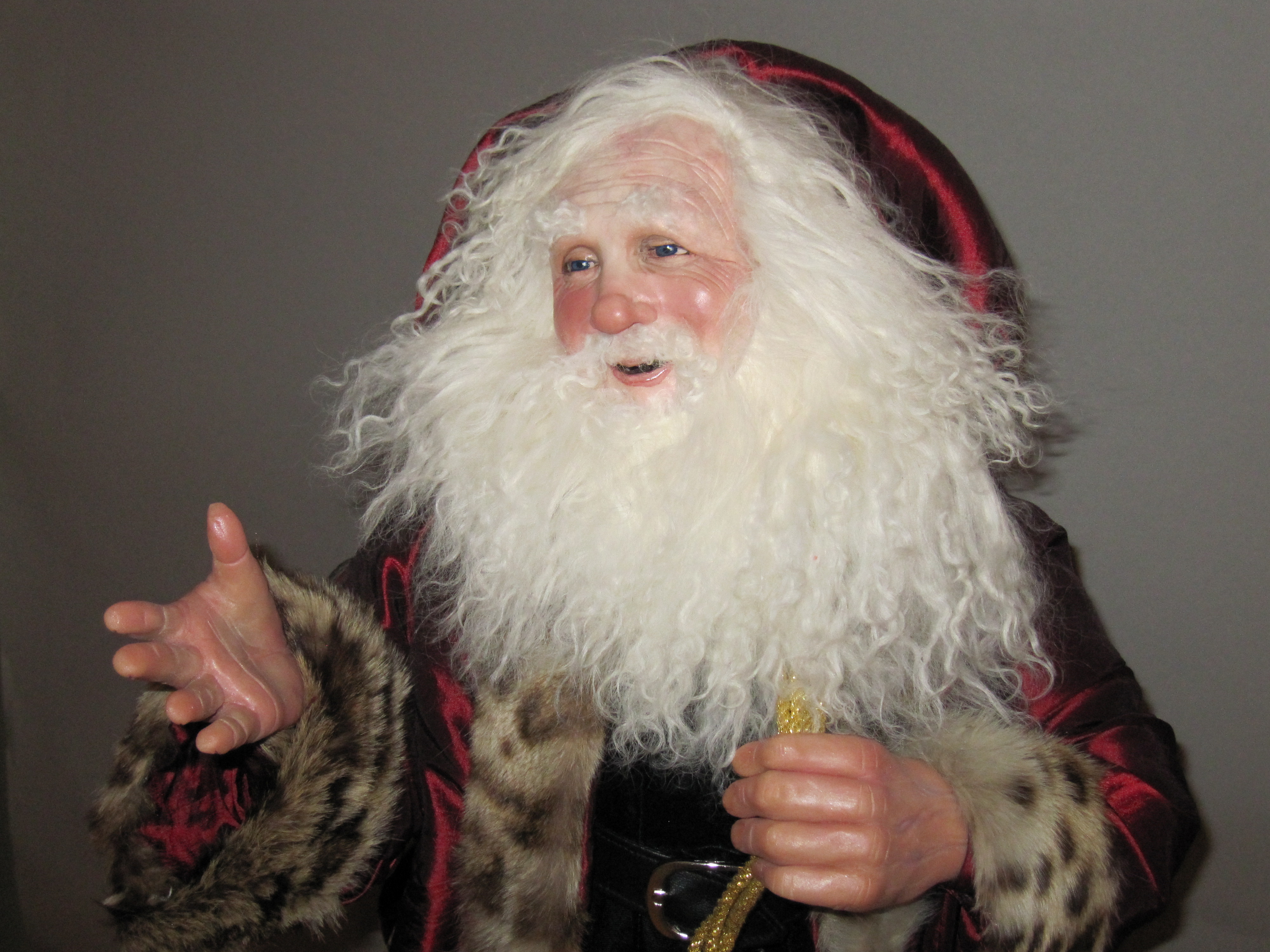
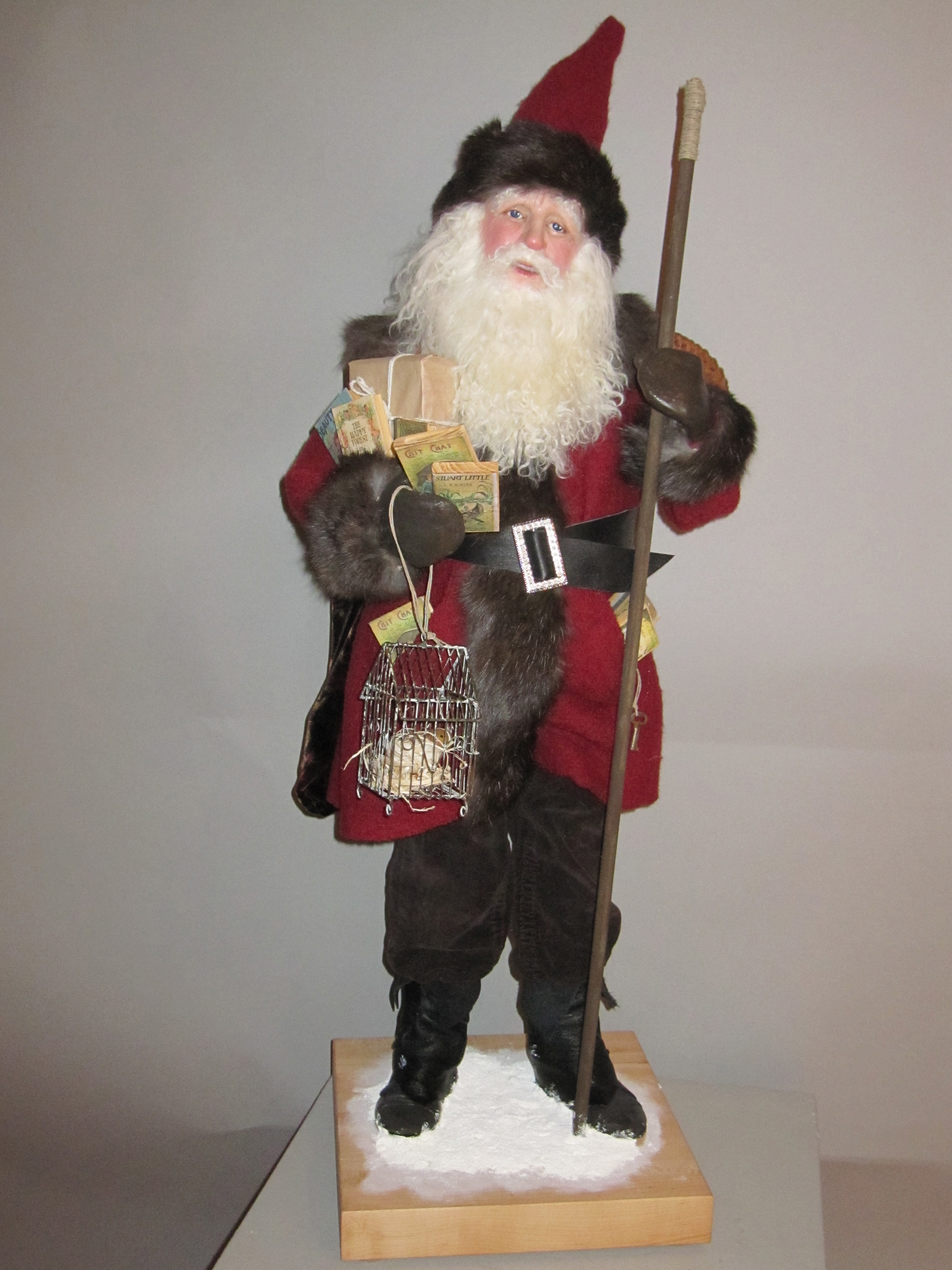
Anyone who knows me, knows I love Christmas. As a matter of fact, I started sculpting Santas and Old World Father Christmas in the mid 1990’s. My Christmas sculptures gave me the opportunity to work on my sculpting techniques, hone my skills and my style and master polymer clay. Over the years I’ve developed into a figurative artist in the fine art world, but Christmas is still dear to me and I always make a few historical Father Christmas pieces. Here are a couple of pieces that I made this year and a little history on the characters. All three pieces are available for sale.

IMG_0571At the beginning of the sixteenth century the Protestant Reformation led many parts of Europe to reject the cult of saints and anything associated with it. The legend of St. Nicolas might have died then and there, but his popularity was simply too great. Most countries changed his name slightly but left his background and other characteristics intact. Even though the Protestant Reformation only lasted 30 years, his new names persisted. To the English he became Father Christmas. This character stands 30″ tall and is dressed in silk satin, velvet and stamped recycled fur. His beard is tibetan lamb and he carries a great assortment of trinkets including a vintage scotch sampler.IMG_0574 IMG_0577

IMG_0566


In Germany he had several names. He was known as Weihnactsmann, the Christmas Man or Knetch Reprecht a more sinister character from the Black Forest. He is also known as Buller Clos which means Nicholas with bells or Pelze-Nichol or Belsnickel, which means fur-clad Nicholas. This character stands 33″ tall and is dressed in red wool and recycled mink. His leather and polymer boots are dusted in snow. He carries a walking stick, vintage books and trinkets.

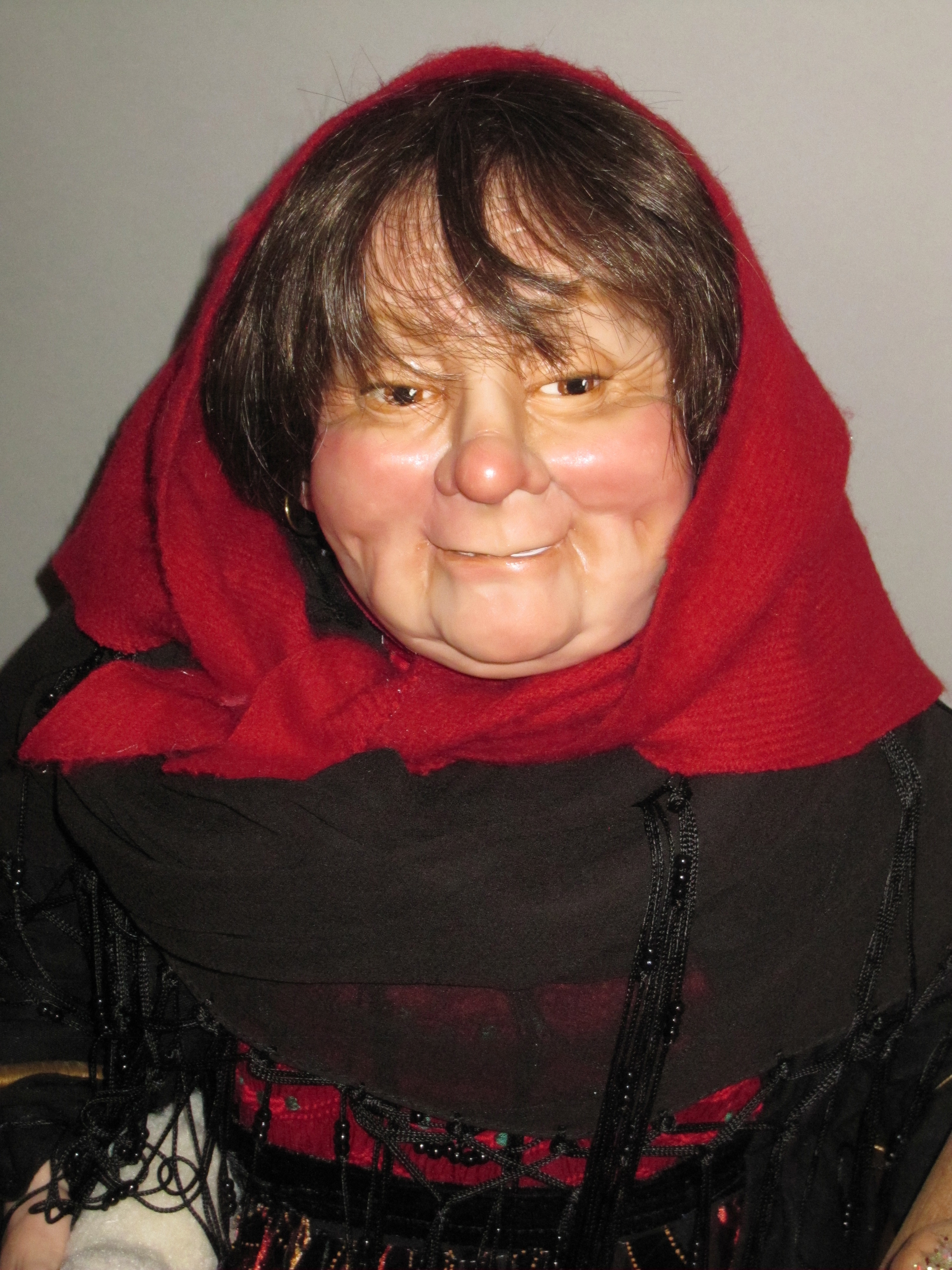
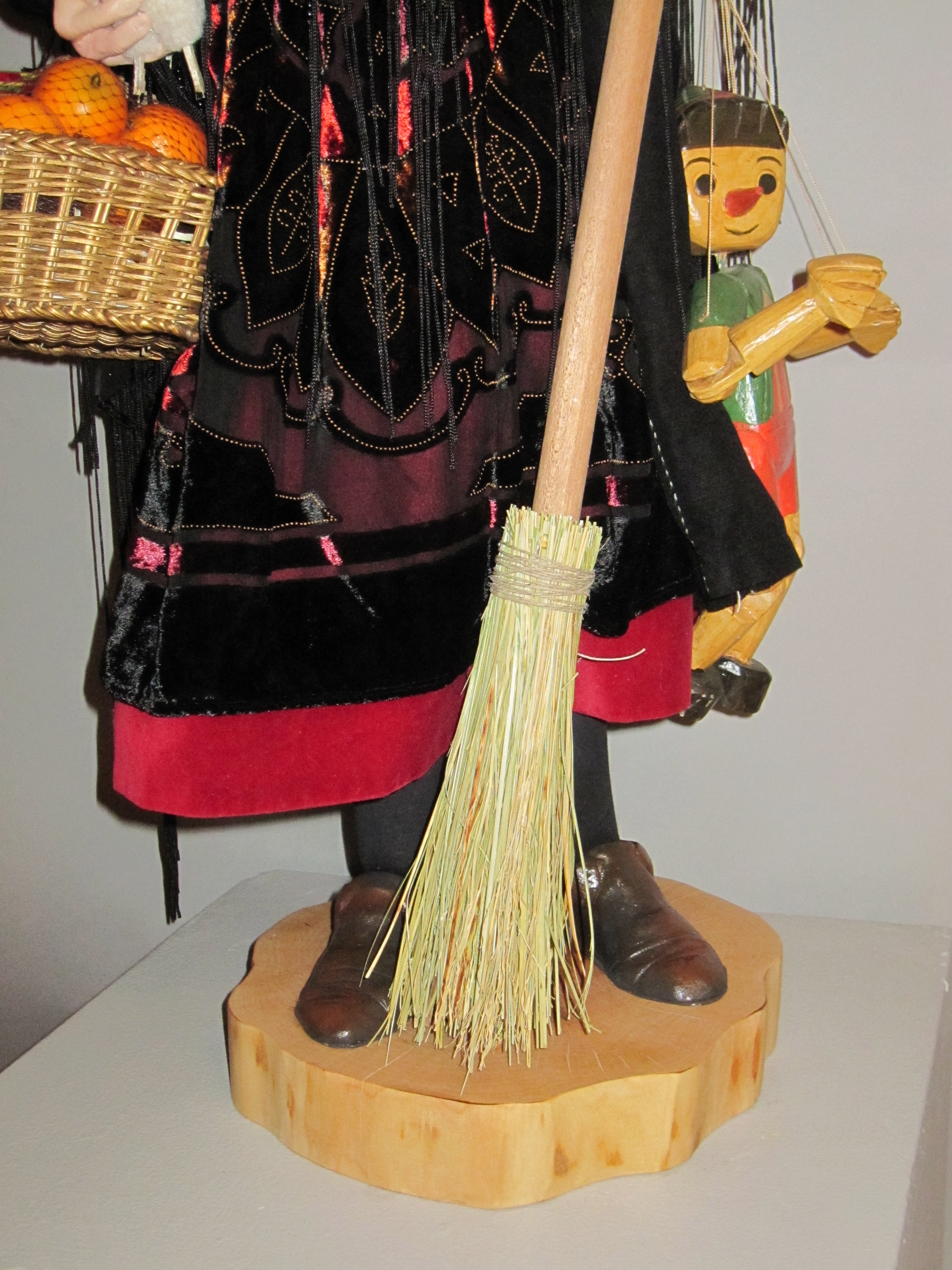
For Italians he is a religious icon known as St. Nicholas of Bari. His buried remains were stolen from Myra by sailors in 1087 AD as a way to protect him from Muslim invaders. The sailors brought the remains to Bari, Italy where they are still on display in the Basilica of St. Nicola and has given him the distinction of being known as the patron saint of thieves and sailors. In IMG_0562Italy, the job of delivering gifts to children belongs to a woman known as La Befana. She was one of the inn keepers who turned Mary and Joseph away on their journey to Bethlehem. When the Three Wise Men stopped for directions she realized her mistake and agreed to join them on their way to find the Christ Child, but first she wanted to bake some sweets and sweep her floor. When she finally set out the Wise Men were long gone and she was lost. To this day she roams the world looking for the Christ Child, leaving treats and toys to children along the way. She arrives on the eve of the Ephifany, January 6th. Traditionally this date marks the end of the Christmas holidays. La Befana stands 32″ tall and is dressed in a smocked red velvet dress, burnt velvet apron, black fringed shawl and wool scarf. She carries a wooden Pinocchio, a basket of fruits and sweets and of course her broom to sweep the floor.

IMG_0563 IMG_0561 IMG_0560

All three pieces are available for sale by request at maria@saracino.ca


WWW.SARACINOCOLLECTION.COM

Posted in Uncategorized | Tagged , , , , , , , , , , , , , , , , , , , , , , , , , , , , , , , , , , , , , , , , , , , | Leave a comment